
 In flame lamination, continuous improvement is not a one-time initiative or a response reserved for when something goes wrong. It is the ongoing work of finding better ways to meet customer requirements, improve consistency, reduce unnecessary waste, and strengthen the systems that support every project.
At Dal-Bac Manufacturing, that commitment applies across flame lamination, thermal fusing, adhesive coating, pressure-sensitive adhesive applications, slitting, die cutting, and other custom converting services. Dal-Bac’s ISO 9001:2015-certified Quality Management System provides the structure for this work through planned processes, data review, customer feedback, audits, corrective and preventive action, and management review.
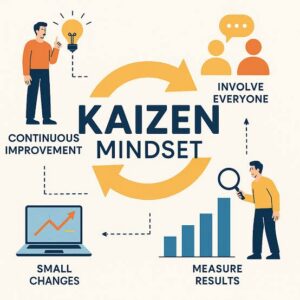 One useful way to understand this process is through the Kaizen model. Kaizen is commonly associated with practical, ongoing improvement: identify an opportunity, understand the current process, test a better approach, measure the outcome, and make the improvement part of the way work is done. Its seven steps closely reflect how Dal-Bac approaches continual improvement in support of quality, efficiency, and customer satisfaction.
1. Improvement begins with paying attention.
At Dal-Bac, an opportunity may come from a customer request, a production observation, quality data, an internal audit, a nonconformance, or a review of how a material performs in a downstream application. The opportunity may involve reducing trim waste, improving roll handling, strengthening process consistency, clarifying inspection requirements, or addressing a material-performance concern before it affects production.
The goal is not simply to correct a problem. It is to identify ways that Dal-Bac can improve products, processes, and the effectiveness of its Quality Management System while continuing to meet both current requirements and future customer expectations.
For customers, this mindset matters because small changes in a laminating process can affect usable yield, production efficiency, product consistency, and the reliability of future orders.
2.Analyze the current process:
Once an opportunity is identified, the next step is to understand what is happening now. Effective improvement depends on facts, not assumptions.
Dal-Bac reviews the appropriate information for the project, which may include production records, process specifications, inspection results, material characteristics, audit findings, customer feedback, scrap or rework trends, and observations from the production floor. This review helps the team understand where variation, delay, waste, or a potential quality concern is occurring.
For example, in flame lamination and thermal fusing, a review may consider material compatibility, setup conditions, temperature, pressure, dwell time, material handling, and the performance characteristics required for the finished composite. Dal-Bac’s existing continuous improvement work recognizes that refinements in these factors can help improve repeatability and reduce defects.
By documenting the current process and reviewing available data, the team can focus on the actual cause of an issue or opportunity – not just its visible symptom.
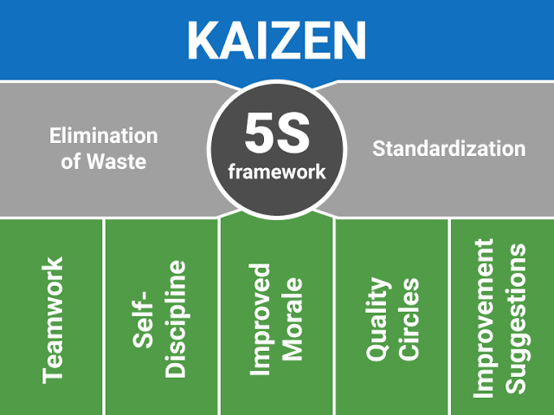
3. Generate practical ideas
The people closest to a process often have valuable insight into how it can work better. That is why improvement is a collaborative effort.
Dal-Bac can draw on the experience of production personnel, quality staff, customer-service representatives, supervisors, and management when developing possible solutions. Depending on the project, the next best step may be as straightforward as clarifying a specification, adjusting a roll width, improving a setup sequence, revising an inspection step, refining material handling, or evaluating a different approach.
The strongest ideas are both technically sound and workable in day-to-day production. They must support the customer’s requirements while maintaining the consistency and controls needed for repeat orders.
This practical approach is especially important in custom laminating, where every material combination and end-use application may have its own requirements. A solution that improves one job must be evaluated carefully before it becomes part of a broader operating method.
4. Test small changes
A promising idea should be validated before it becomes standard practice.
When appropriate, Dal-Bac can evaluate a change through sampling, a controlled trial, a first-article review, or a limited production run. Testing at an appropriate scale helps reduce risk while giving the team a meaningful way to determine whether the change delivers the intended improvement.
For instance, an adjustment to a material configuration, a revised slit pattern, or a change in setup parameters may be tested against the required specifications before it is used more broadly. The objective is to confirm that the process continues to deliver the quality, performance, and repeatability a customer expects.
This step aligns closely with the disciplined approach Dal-Bac uses throughout its continuous-improvement process: define requirements, run the process under established controls, review the outcome, and make informed adjustments when an opportunity exists.
5. Measure the results
 A change is only an improvement if it produces a meaningful, verified result.
Dal-Bac evaluates results using measures appropriate to the project and the opportunity being addressed. Depending on the situation, that may include inspection results, material yield, scrap levels, production consistency, setup time, on-time performance, customer feedback, corrective-action effectiveness, or the reduction of repeat nonconformities.
The purpose is not to chase a single metric. It is to determine whether the change has improved the result that matters most: better conformance to specifications, more consistent output, reduced risk, improved efficiency, or a stronger customer outcome.
ISO quality-management principles similarly emphasize monitoring, measurement, performance evaluation, and improvement based on evidence. An effective Quality Management System helps organizations understand how their processes are working, identify where improvement is needed, and make decisions using relevant data.
6. Implement what works
When a change has been tested and the results show a real benefit, Dal-Bac can implement the improved method more broadly.
Implementation means moving beyond a one-time success. The team applies the better approach in a controlled way so it can be repeated across future production runs, shifts, and customer orders as appropriate. That may involve updating process controls, clarifying responsibilities, communicating changes to the people involved, or ensuring that the revised approach continues to align with customer specifications.
For customers, this is where continuous improvement becomes tangible. The benefit is not simply that Dal-Bac solved one issue on one order. It is that the organization uses what it learns to make future work more dependable.
7. Standardize and share the improvement
The final Kaizen step is what makes improvement sustainable: standardize it and share the knowledge.
At Dal-Bac, successful improvements can be incorporated into operating procedures, work instructions, quality documentation, training, and process controls. This helps ensure that a better method does not depend solely on an individual’s memory or a single successful production run. It becomes part of a consistent, documented approach to quality.
Dal-Bac’s continual-improvement process is supported by its quality policy, audit results, analysis of data, customer feedback, corrective and preventive action, and management review. The management team regularly reviews the continual-improvement plan, with progress and results discussed as part of management review. This keeps improvement active, visible, and connected to the company’s broader customer satisfaction objectives.
Dal-Bac’s approach reflects a central idea in ISO 9001: quality management should be dynamic. Organizations continually evaluate processes, use evidence to improve them, and build what they learn into more effective systems.
Small changes, meaningful results
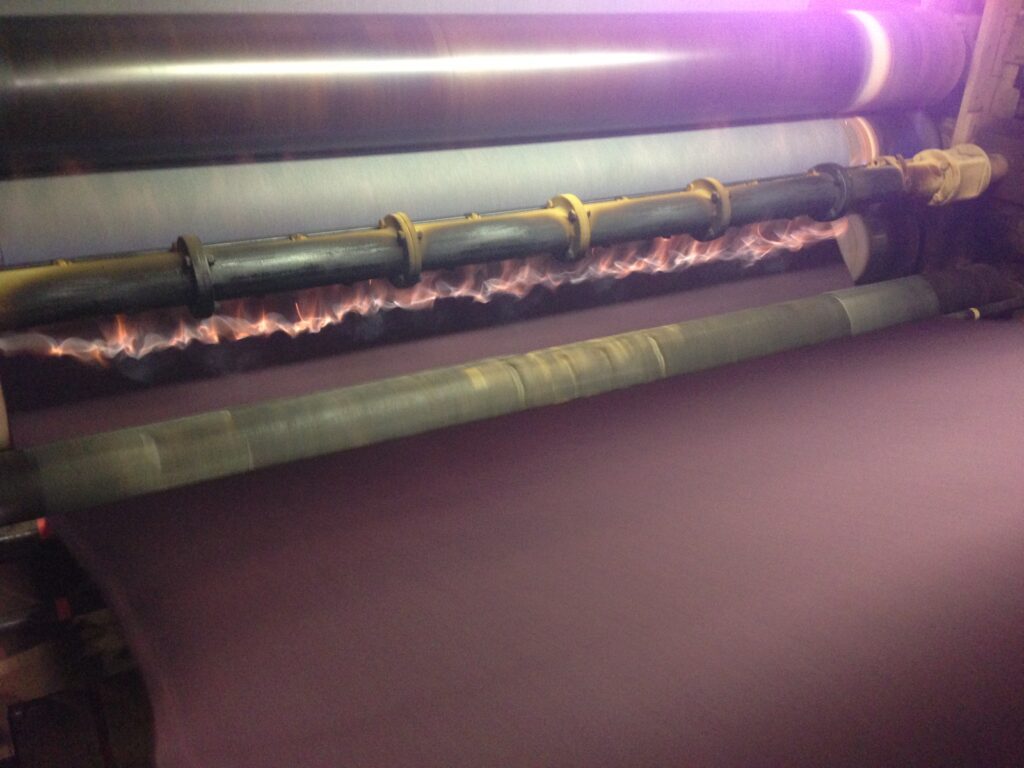 Kaizen is often associated with small, practical changes. In custom lamination, those changes can create meaningful value.
At Dal-Bac, continual improvement is not separate from quality – it is how quality is strengthened over time. By identifying opportunities, reviewing facts, involving the right people, testing solutions, measuring results, and standardizing what works, Dal-Bac continues to improve the products, processes, and service experience that customers depend on.
For manufacturers seeking a lamination partner that applies continuous improvement to flame lamination, thermal fusing, adhesive coating, slitting, die cutting, and custom material solutions, Dal-Bac brings a quality-focused approach to every project.
Whether you need flame lamination, thermal fusing, coating, or pressure-sensitive adhesive solutions, Dal-Bac is ready to help move your project from concept to a reliable production solution. Contact Dal-Bac Manufacturing today to learn how our experience can benefit your bottom line.